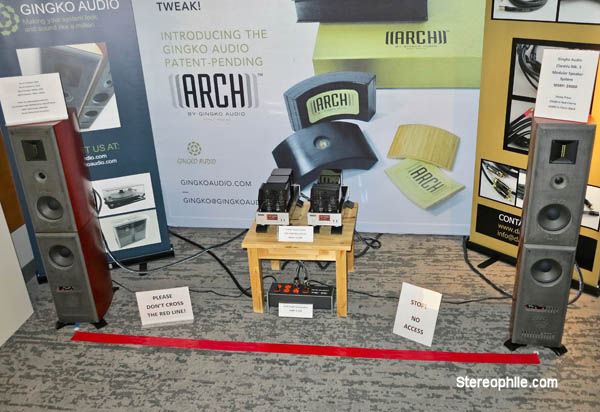
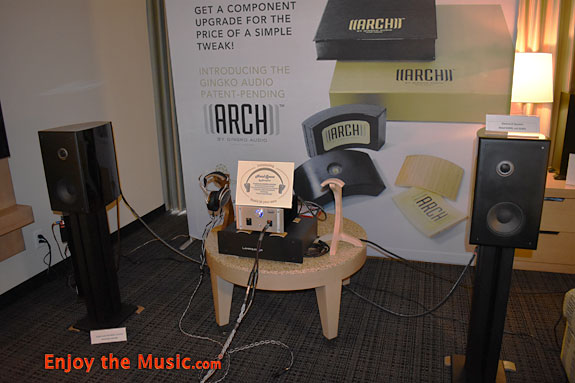
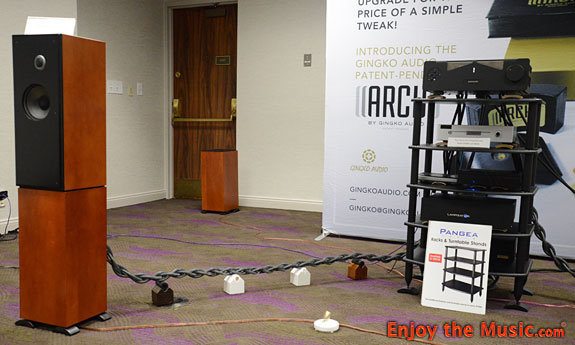
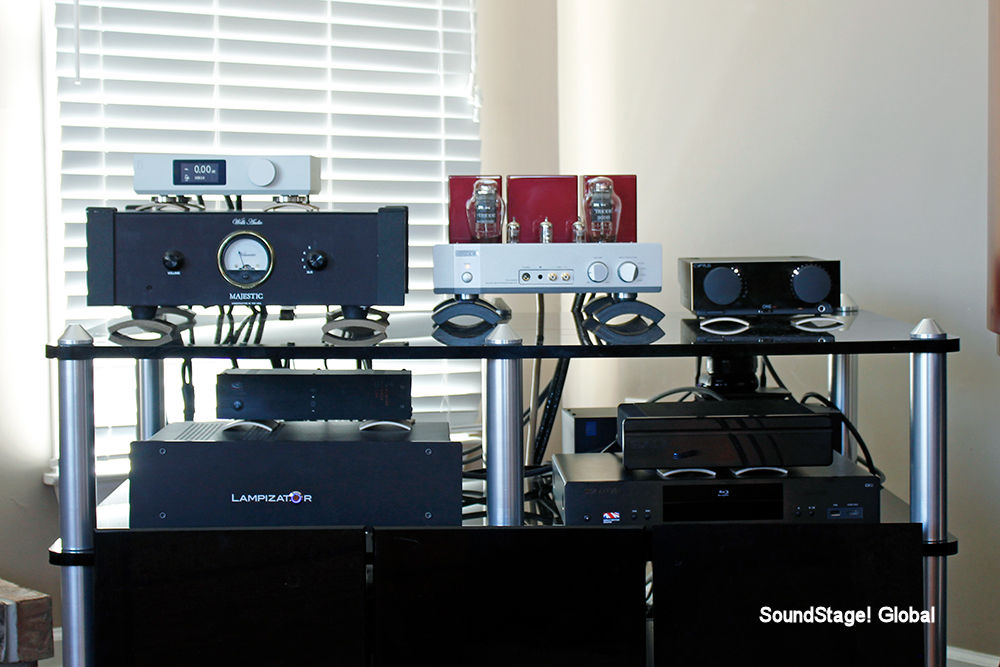
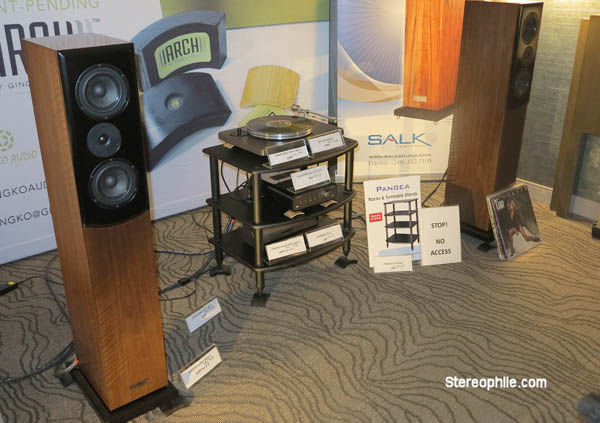
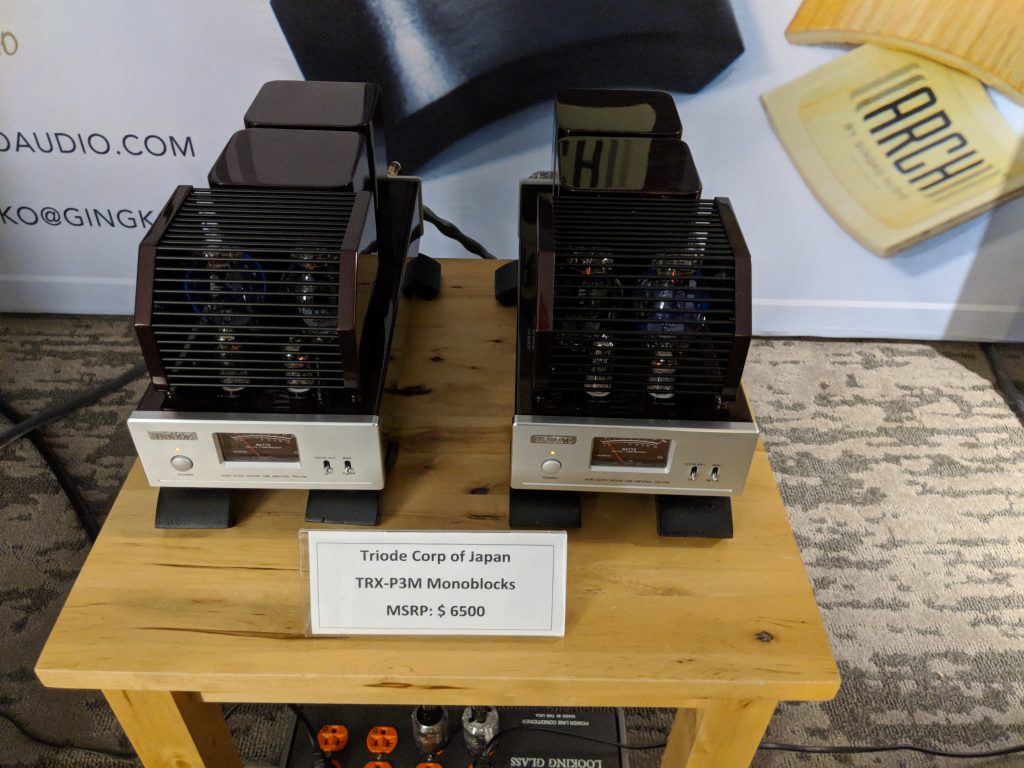
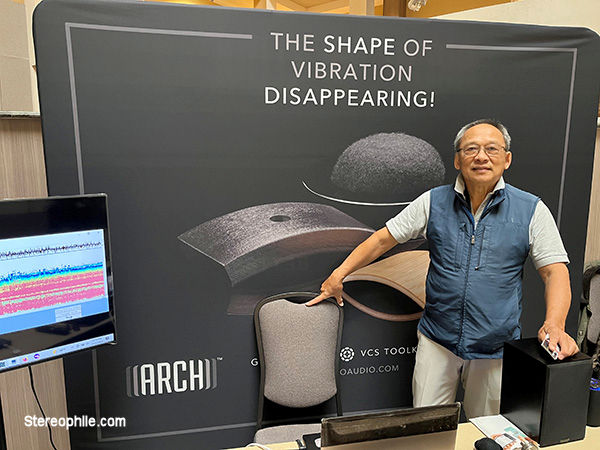
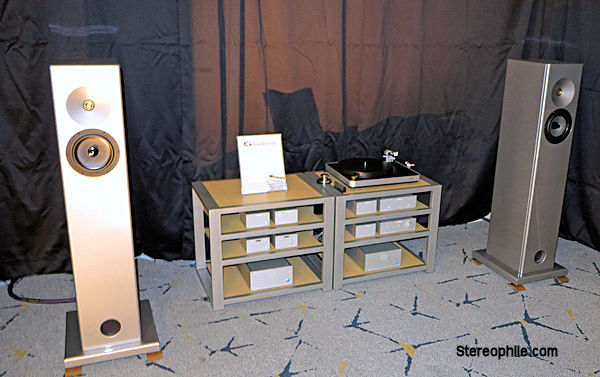
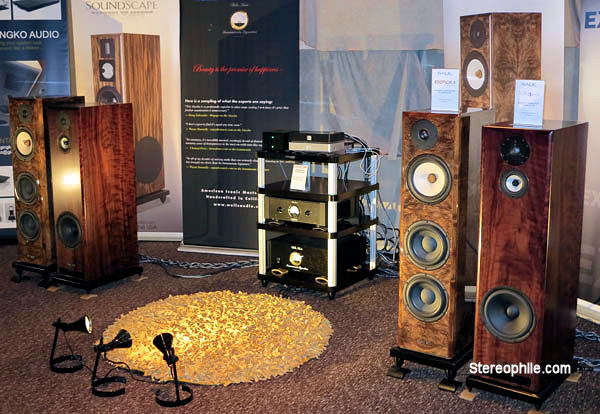
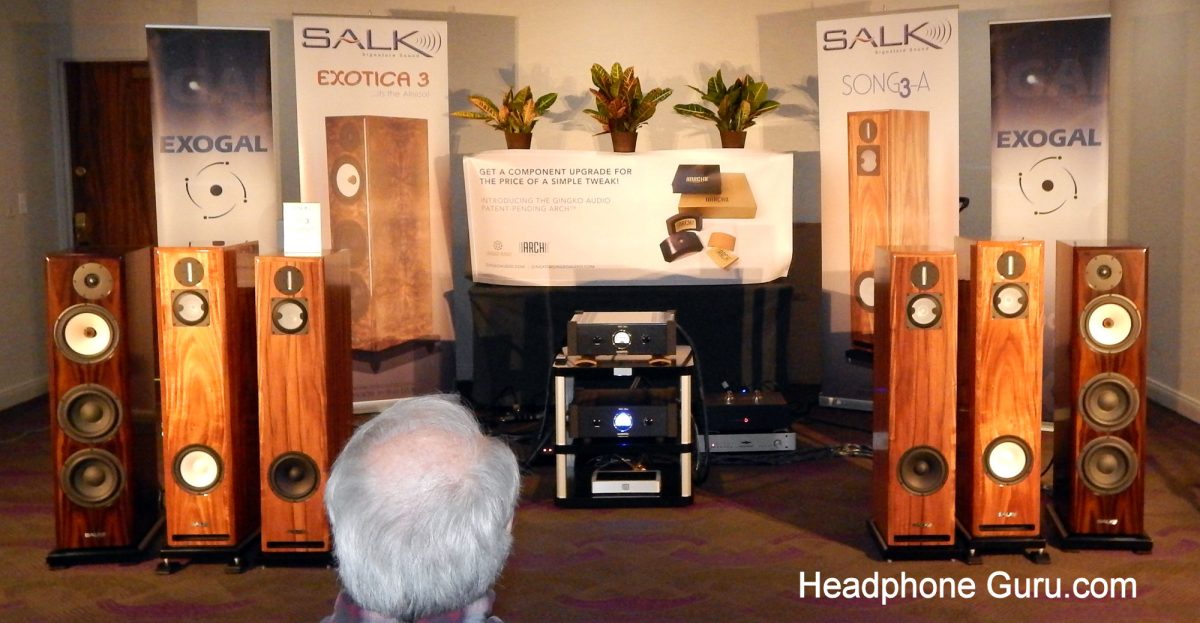
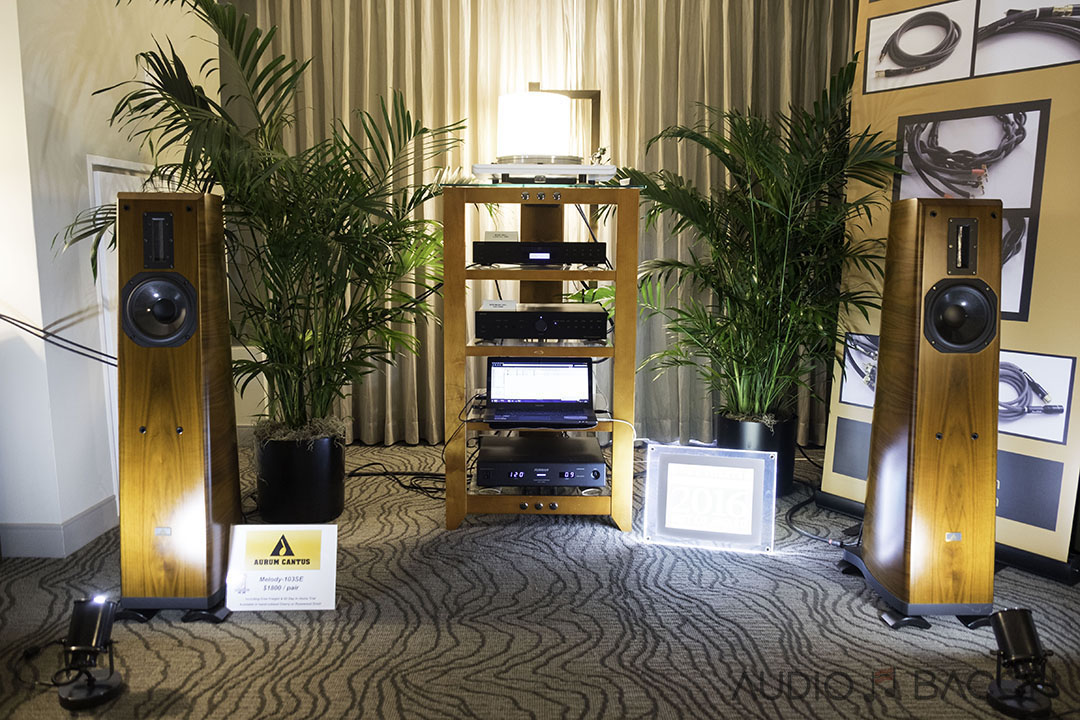
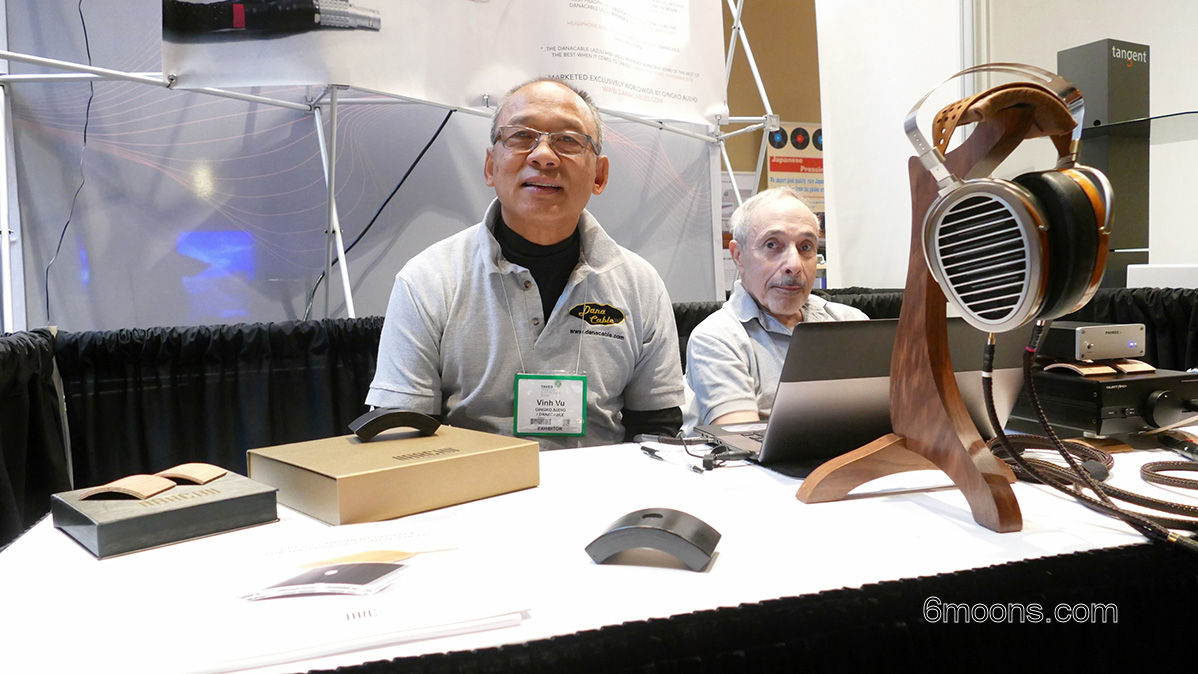
The Gingko Audio Sextet was introduced at the Capital Audiofest in Rockville, Maryland, in November 2019. Here are some first impressions from show attendees:
“This was a masterful demo; one that clearly demonstrated why you need the extension provided by a full range speaker or a well-mated satellite/subwoofer system. It is not just deeper, more pitch defined, impactful bass, but the addition of the bloom and body, the more correct voicing, and the expansive space and dimensionality that it affords.”
“There were two rooms running Ginko speakers and both systems were very good sounding. One was a $10,000 system running in one of the big rooms which sounded beautifully balanced, natural, and relaxed, without sounding lifeless. The small stand-mounted speaker in another room (I think it was $3,000) sounded very good too-very well balanced and natural sounding.”
“Gingko Audio had for me, the most realistic soundstage with their Sextet speakers that include 2 monitor speakers and 4 subs in a swarm arrangement. Excellent imaging, and the bass was spot on.”
“Gingko audio had small speakers in a small room and bigger speakers in a big room. I only spent a small amount of time in each room, but they both accomplished the naturalness and dimensionality that hits me hardest when it’s there and leaves me least engaged when it’s not.”
Gingko Audio’s Acoustic Resonance Clarifier (ARCH) won a 2018 Positive Feedback Writers’ Choice Award. These awards are given by the editors and writers of Positive Feedback to products that they evaluated in 2018 and selected for superior audio design. The article on this year’s winners can be found in Issue 100 of Positive Feedback.
"I was not prepared for the overall improvement the ARCHs made. Compared to the sound of the speakers and stands sitting on spikes, the improvement to overall transparency and clarity was immediately obvious. The mid-range was less colored, and imaging was better defined. Mid-bass response was enhanced and leading-edge transients were more pronounced. More energetic momentum and timing with a nice ease of flow and a silkiness urged me to get up and dance—and I’m not a dancer. The changes were not subtle, and truly enhanced the listening experience."
Gingko Audio will be at the Rocky Mountain Audiofest in October and the Capitol Audiofest in November. We plan to feature the same demo of the ARCH™ vibration control device that we featured at AXPONA 2017. For an explanation of the vibration measurements used to compare the ARCH’s performance vs. conventional speaker spikes, read our White Paper on why the ARCH works better!
In 2016, Danacable’s Lazuli Reference headphone cable received a Product of the Year award from Headphone.guru:
"It has long been the mantra of high-end audio that cables are as much an audio component as any other part of your system, and this also applies to headphone cables. More so than any other component, it is the job of the headphone cable to get out of the way and do nothing to the sound, letting the music through and Dana Cables Lazuli Reference Headphone Cables do an exemplary job of this, allowing all the resolution, dynamics and silence to pass through without slowing, congesting, compressing or adding tonal changes to the signal. More so than any other headphone, a reference headphone deserves a reference cable which is why we have made Dana Cables Lazuli Reference Headphone Cables our Accessory of the Year."
– Gary Alan Barker
We will again be showing this setup at AXPONA in Chicago on April 21-23. Please be sure to stop by the Ear Gear Room to listen if you plan to attend AXPONA
At the RMAF 2016, we showed the prototype model of the new DanaTone Head-Space headphones amplifier to rave reviews. Dave Hanson of Enjoy The Music writes: “Arguably one of the most impressive products to debut at CanJam at RMAF was the yet-to-be-released DanaTone Head-Space amplifier (price TBD). Developed by Dana Robbins, who is best known for his fantastic lineup of cables, the Head-Space uses a proprietary selective current feedback technology to deliver tight and impactful bass, euphonic mids and well-controlled treble. The soundscape was quite spacious, with very precise variations in imaging depth, width and height. Through the HIFIMAN HE1000, the Head-Space exuded lush musicality without sacrificing an ounce of accuracy.”
On the Lazuli Reference cable, he adds: “I’ve done extensive testing with this cable (review forthcoming) and it offers the most beautiful, natural midrange and the absolute best bass of any cable I have ever tested. Combined with the Head-Space amplifier and the HIFIMAN HE-1000, the sound left very little to be desired.”
We will again be showing this setup at the NYC Audio Show on November 4-6. Please be sure to stop by to listen if you plan to attend the NYC Audio show.
So you’ve read all about Gingko Audio’s vibration control products – from the inexpensive Mini-Clouds to the Cloud 14A that is designed specifically for lighter components to the Platformula™ rack. This simple guide will help you pick the right Cloud™ for your application.
Each Gingko Audio vibration control product has a bottom plate with dimples on it to hold the balls. The balls provide suspension to support a load. Adding more balls creates stiffer suspension, while removing balls results in softer suspension. A stiffer suspension will make the music punchier, with more dynamics, while a softer suspension will make the music fuller, with more body. You can tune the music to your taste by adding or removing balls from the Cloud™ base. You will need a minimum of three balls to support a component. Each ball is designed to support an optimal weight of 10 lbs and a maximum weight of 20 lbs.
The number of dimples on the bottom plate vary across the Cloud™ Series. The Mini-Clouds come as sets of three bases with individual dimples. The Semi-Cloud has 9 dimples so it can hold a maximum of 9 balls for an optimal load of 90 lbs. The Cloud 10 has 15 dimples. The Cloud 11 has 10 dimples inside larger wells to prevent the balls from rolling off the dimples. Besides the suspended Cloud supporting the plinth, the Cloud 12 has a separate fixed platform to hold the motor pod to prevent the vibration from the motor to transfer to the main turntable.
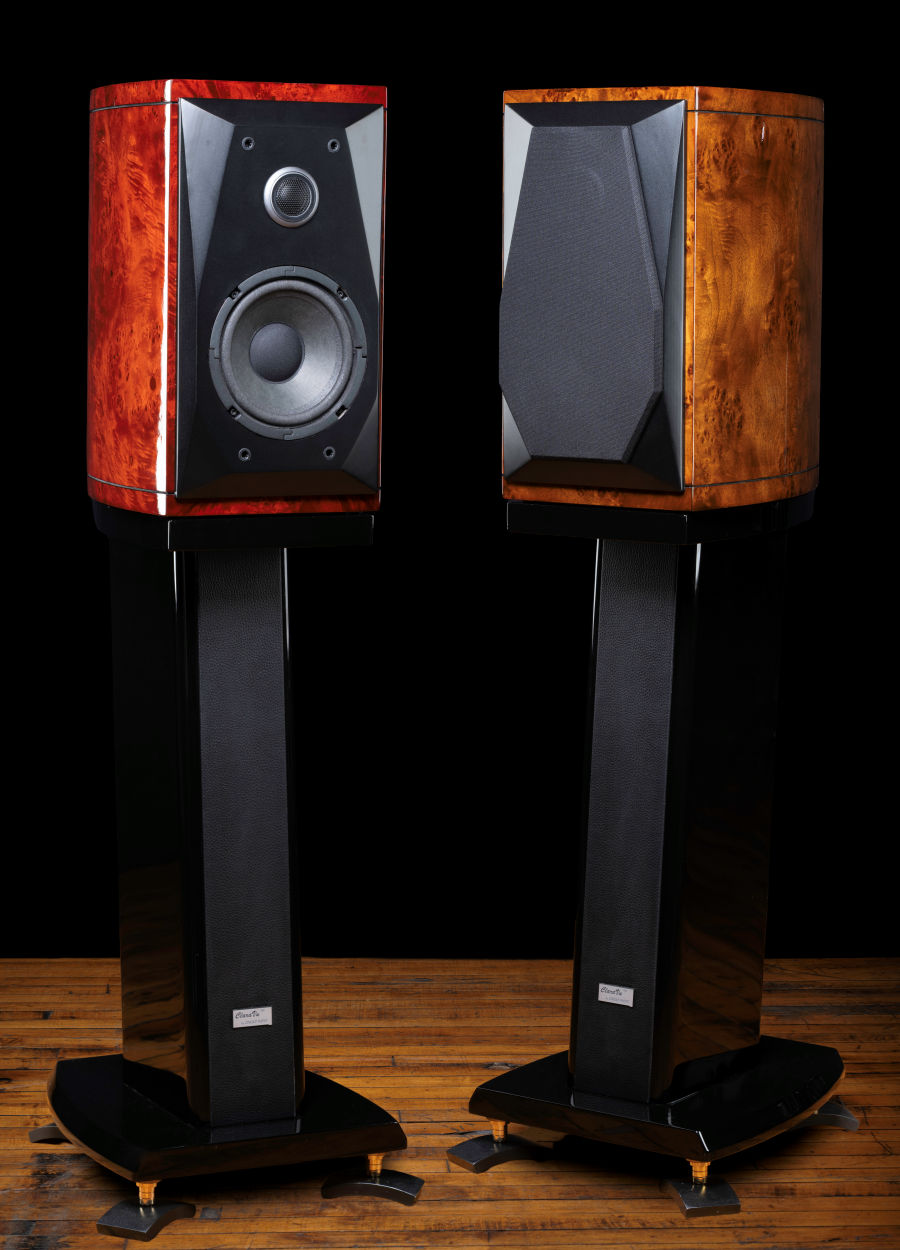
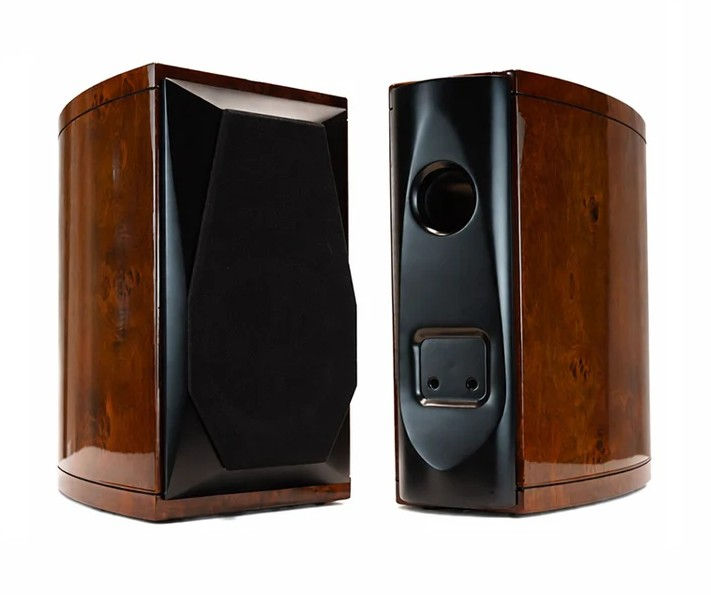
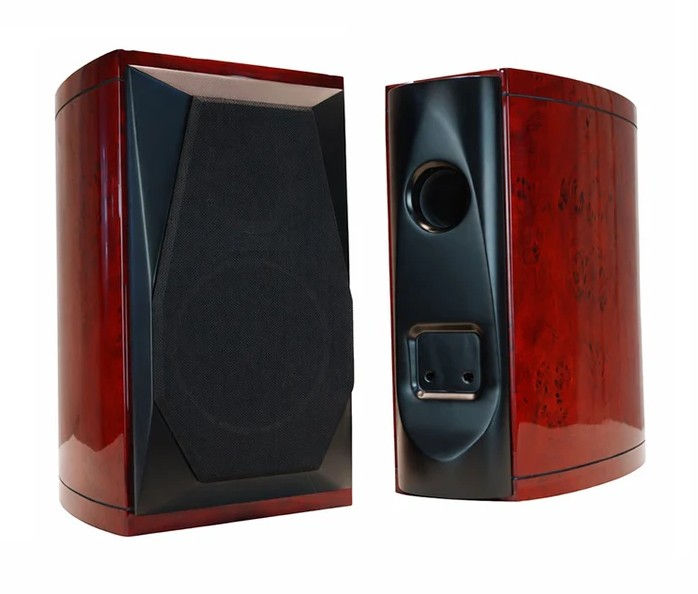
The culmination of our 20-year experience building high-performance, high-value speakers, the FosterVu is a two-way monitor with a 1-inch soft dome tweeter and a 6.5″ treated-paper woofer in a ported bass reflex cabinet. The cabinet comes in two wood finishes: Black Walnut (left image below) and Red Rosewood (right image).
Until November 15, 2026, you can purchase a pair of FosterVu speakers at the introductory price of $1999 (the MSRP is $2499/pair). Shipping within the continental US is $125/pair; $250 elsewhere. Stands are not included.
The FosterVu speaker is hand-made after the order is placed. The lead time will be 4-5 weeks.
For audiophile DIYers who want high-end sound on a budget, Gingko Audio introduces the MooVu™ Speaker Kit, at $499 MSRP. The kit consists of custom 6.5” woofers and 1” soft dome tweeters, complete with crossover, OFC copper wirings, and instructions.
Assembly can be completed in one afternoon, using just a portable drill and screwdriver – no soldering required.
The MooVu speakers made their debut at the 2025 NYC Audio Show in Hasbrouck Heights, New Jersey, on October 24-26, 2025. They will be presented in Room 706 (DC Hifi Group) at the 2025 Capital Audiofest in Rockville, Maryland, on November 14-16, 2025.
Despite our best efforts to describe what we hear, something will be lost in translation because we all hear differently. Furthermore, each of us can listen to the same recording at different times and, from session to session, hear different aspects of it. It may be useful, nonetheless, to identify sound characteristics in evaluating an audio system or component.
A term frequently used among audiophiles is hi-fi or high fidelity. Is the sound produced by an audio component an exact replica of the sound heard by the recording engineer? Perhaps only the recording engineer could answer that question. Another popular discussion among audiophiles is whether the equipment sounds “musical” or “hifi-ish”. “Hifi-ish” prioritizes sound quality over holistic enjoyment of a piece of music. Of course, the quality of the sound may get in the way of the holistic experience. A listener may disengage from a veiled recording played through poorly designed equipment. Overly bright sounds may be fatiguing. Hence, the characteristics discussed below straddle the “musical” and “hifi-ish”.
Sound Stage — Spatial information is crucial for listeners to imagine a live performance through the recording. Most concerts are amplified in some fashion. What a concert goer hears is not necessarily the performers themselves but loudspeakers controlled by the sound engineer. Ideally, the recording microphones would be placed where the engineer thinks the best sound is in the venue. An audio system with a good sound stage enables listeners to close their eyes and be transported to that sweet spot.
Timbre Accuracy — Our brain can decode subtle differences in instruments (Stan Getz’s tenor saxophone versus Scott Hamilton’s) and in voices (Frank Sinatra versus Frank Sinatra Jr. even though their voices are quite similar). A good audio system reproduces accurately not only frequencies but also complex harmonic structures. It conveys nuances in a realistic way, from the caressing pressure of the bow on a string instrument to the huskiness of a baritone.
PRaT (Pace, Rhythm, and Timing) — An audio system with PRaT makes listeners want to move with the music.
Clarity — Sound stage, timbre, and PRAT cannot be experienced with a muddled sound. Clarity enables listeners to enjoy a musical piece as a whole or to focus on the piece-parts.
Balance — With a balanced audio system, no individual part in a musical piece sticks out in an unnatural way. A soloist would be prominently featured; the supporting cast of performers would come into focus or recede at the right times.
Reviews of audio components often mention characteristics such as treble extension, deep and tight bass performance, or mid-range purity. These frequency-related qualities often reflect the listener’s preferences for certain sounds. That is why there is no such thing as the “absolute sound!”
Theories and opinions abound on vibration control for audio equipment: Is vibration control needed? If so, which products work best? Let’s start with how vibration affects sound quality.
Loudspeakers — To reproduce sound from a source, a moving component in the loudspeaker (a dynamic driver, a ribbon, an electrostatic panel) must vibrate and cause change in air pressure. “Good” vibrations replicate the recorded signals. But other characteristics of the loudspeaker (cabinet resonance, crossover components, driver specifications) may introduce unwanted vibrations.
Vibrations from loudspeakers are transmitted elsewhere through the air or to the floor through the stands, causing more vibrations in the listening environment. The aggregate effect can interfere with the listener’s perception of certain frequencies and processing of complex harmonics. It can also result in indirect reflections of low bass frequencies.
Other Audio Components — Vibration can create electro-magnetic fields around wires inside an audio component. It can cause the transport mechanism in a CD player to shake. In an analog setup, it can move the stylus in the record grooves in unexpected ways.
Evaluation Criteria
There are many vibration control approaches on the market. Some seek to isolate the components from vibrations in the environment while others try to channel vibration away from the components. The material used ranges from soft iso-elastomers to hard metallic cones or balls. To evaluate the effectiveness of a solution, we need to establish how to measure the results.
Accelerometers — Applying a vibration control device to a component should result in less vibration. The easiest way to quantify the difference is to compare signals from identical accelerometers, one mounted on the component with the treatment, the other on an identical component without the treatment. This test may be impractical because it requires two identical components operating under identical conditions except for the vibration control device.
An alternative way to quantify the difference is to mount one of the accelerometers on the component, the other on the shelf directly under the vibration control device. If the device does anything to the vibration, the accelerometer on the component should show less vibration than the one on the shelf.
A/B Listening Tests — The effect of reduced vibration on the sound quality should be verified in blind listening tests with multiple test subjects.
Vibration Control Methods
Spikes
The spike-based method encompasses any variety of feet used to support audio equipment.
Most audio components have rubber feet. Regardless of the material and durometer of the feet, their purpose is to cushion the chassis and lessen the vibration that can channel up from the rack shelf to the component.
Most speakers come with spikes that are typically made of metal (steel, aluminum, copper, bronze, etc.). Spikes couple the speaker cabinet to the floor and prevent the cabinet from moving with the drivers thus smearing the sound. They are also meant to channel vibration away from the cabinet, but this notion is often challenged.
Suspension
Suspension-based devices work like shock absorbers on cars. The vibration transfer is reduced in both directions, to and from the component in question. The suspension can be air-based, spring-based, or both. The stiffness of the suspension can be tuned to match the weight of the component to optimize performance.
Constrained-Layer Damping
Different materials have different resonances and affect vibration differently. Judicious use of layers of different material to provide a base for components can reduce vibration across the frequency spectrum.
METHOD
PROS
CONS
Spikes
• Provide a firmer base for the speaker or component. • Reduce vibration transfer by isolating the bottom of the speaker cabinet or component chassis from the surface it rests on.
• Even when the difference in vibration can be measured, improvements tend to be small. • The spike material will have its own resonance that can affect the final result.
Suspension
• Can be tuned to suit the application and optimize performance. Reduction in vibration can be measured as the suspension is tuned.
• Can be difficult to balance and level. • When not configured properly, can cause the supported component to be unstable.
Constrained-Layer Damping
• Simple to design and manufacture, once the combination of materials and construction technique has been selected.
• The materials used may have their own resonance that can affect results, depending on the applications. • The thickness of the base adds to the overall height of the component.
VIBRATION CONTROL METHODS – PROS AND CONS
Theory vs Practice
Although spikes are meant to channel vibration away from the speaker cabinet to the floor, tests using accelerometers have shown similar vibration between the accelerometer the floor and the one on the cabinet. This may be because the spike transmits vibration in both directions.
We find that a suspension-based approach works for most audio components. Gingko Audio’s Cloud platform combines the suspension provided by rubber balls with the rotational movement of the balls on dimples in the platform base. The Cloud platform works great for turntables and similar components. But it does not work at all for speakers because it wobbles under the load, especially when the speaker plays music.
A constrained-layer approach requires careful design, testing, and measurements to ensure positive results across different components. As an example, Gingko Audio’s ARCH is a multilayered band in a curved shape that acts as a leaf spring, turning vertical vibration energy into horizontal vectors under load. The choice of materials and construction technique must take into account different component weights.
Theories and measurements aside, if the listener can hear the effects of a vibration control device and concludes that they yield more enjoyment of the music, then it is the “best” device for his/her application. Not everything works well in all situations, so by definition, the “cost-effective” device is one you can return and get your money back if you are not satisfied with its performance.
Write to us at gingko@gingkoaudio.com with your specific needs and we will recommend the right solution for you.
There are five broad categories of components in an audio system: Source, amplification, loudspeaker, connections, and accessories.
Source
Source components decode the information that has been encoded on storage media (vinyl records, CDs, etc.) and reproduce the original recording of the musical performance. High fidelity, or hi-fi, denotes how faithful the reproduction is to the recording. On live recordings, listeners can recognize not only the individual sounds of the instruments but also where the instruments are located in the three-dimensional space of the venue. On studio recordings, listeners can hear the final mix and sound stage intended by the recording engineer.
Flaws in a source component cannot be corrected by another component later in the chain. A good source should make a good recording sound good and a bad recording sound bad. A bad source may make a good recording sound bad or a bad recording sound better, i.e., more “musical sounding”, but it is still a bad source.
Amplification
Amplification components boost the sound signal. A preamp takes a low signal from a source, boosts it to standard voltage level, and outputs it to an amplifier. The amplifier boosts the signal to an even higher level to drive components in the speaker that, in turn, reproduce the recorded sound. The preamp also serves as a control point for adjusting the volume, inserting frequency equalization to the signal, and switching between different components as the source of the signal.
Loudspeaker
Loudspeakers are designed to have a distinct “voice”: The designer will have tweaked the speaker’s components (drivers, crossovers, cabinet) to reproduce what they deem as the sound of the original recording. Two designers may use similar physical parts (capacitors, inductors, resistors, etc.) yet create two entirely different voices. Furthermore, listeners may love one design and loathe the other, depending on the sound they were seeking.
Connections
Whether wired or wireless, the connections between audio components can have a significant effect on the reproduced sound. As inherently passive components, connections should be as transparent as possible. Using connections to tune the sound to one’s liking (tempering a “bright” sound or boosting the high frequencies of a “dull” sound) is masking a problem that should have been fixed elsewhere in the audio system’s chain.
Accessories
Sturdy racks or stands provide a stable base for a system’s components. Tweaks such as vibration control, when applied correctly, can optimize the system’s performance. On the other hand, a turntable dust cover can cause vibrations that are picked up by the stylus riding on the record grooves. Though often overlooked, accessories can enhance the overall sound – or ruin it.
Allocation of Audio Budget
We are often asked how important is a particular piece of equipment relative to the entire audio system. In other words, what percentage of an audiophile’s budget should be allocated to each type of component? Below is a suggested rule of thumb.
Type of Component
Allocation
Rationale
Source
30%
A bad source cannot be corrected with another component or treatment down the chain
Loudspeaker
30%
The choice of loudspeaker is so personal that skimping on the cost may lead to wrong choices.
Amplification
20%
Amplification needs to match the choice of loudspeakers, e.g., more power for less sensitive speakers.
Connections
10%
Cables cannot make bad components sound better but they can make good components sound worse.
Accessories
10%
Accessories can eliminate or reduce bad effects from the environment on the system components.
One may argue that since the preamp is the control center of the system, it should warrant a larger portion, something like 20% by itself. A listener who puts a high value on the bass performance of a speaker may argue for a beefier amplifier capable of controlling the speaker’s drivers for a tighter and more powerful bass.
In summary, putting together an audio system should start with understanding the listener’s preferred sound and priorities in achieving that sound. Contact us at gingko@gingkoaudio.com for help with the journey.
Vibration Control Solution (VCS) TookitDay Two with Herb H Reichert, Stereophile, Apr 2018Florida Audio Expo 2020 Show Report: DanaCables And Gingko Audio – F Garofalo, Enjoy The Music, 2020AXPONA 2019 COVERAGE – F Iacone, Headphone Guru, 2019Capital Audio Fest 2019 – G Weaver, Enjoy The Music. 2019Pop-Up Audio Demo at Gingko Audio – H Kneller, Sound Stage! Global, Apr 2019More to See on RMAF Day 3 – JV Serinus, Stereophile, Oct 2018AXPONA 2018 Report S – Rochlin, Enjoy The Music, 2018Gingko Audio Axpona 2018 – M Davis, Audio Federation, May 2018Capital Audiofest 2022: A Fantastic Show – K Micallef, Stereophile, Nov 2022Multiple Goodies as Jason’s Second Day Ends – JV Serinus, Stereophile, Jun 2017Jason’s Day One Continues: One Step Closer to Oz JV Serinus, Stereophile, Apr 2017CANMANIA AT CAPITAL AUDIOFEST PART 1 – GA Barker, Headphone Guru, Nov 2017RMAF 2017 Grand Show Report – J Luong, Audio Bacon, Oct 2017Gingko Audio’s ARCH Products – 6moons.com, Industry Features, TAVES 2017
Since its introduction in 2017, Gingko Audio’s ARCH (Acoustic Resonance Clarifier) has been featured in many rooms at the largest audio shows, as well as smaller settings such as popup audio demos. Click on each image in the gallery (or in the slide show below) and follow the embedded link to read the original show reports.
Capital Audio Fest 2019 – G Weaver, Enjoy The Music. 2019
Since 2000, Gingko Audio has introduced many vibration control products, from the Classic Cloud Platforms that have been on Stereophile’s Recommended Components List since 2004, to the patented Acoustic Resonance Clarifiers (ARCHs), to the latest Cloud22 products. All these products represent a complete portfolio of solutions to possible vibrations problems that negatively affect the sound quality.
Besides numerous positive reviews on audio magazines over the years, below are videos demonstrating how to use Gingko Audio vibration control products.
Following the successful introduction of the Vibration Control System (VCS) Toolkit, we are offering a special edition of the Large Cloud22 Bases made of wood for a warmer, more musical sound, compared to bases made of acrylic. These Special Edition Large Cloud22 Bases will be available for US$ 159 a set through the end of August.
Gingko Audio has been developing vibration control products since 2000, from the award-winning Cloud 11 platform, which has been on Stereophile’s Recommended Components list since 2004, to the patented ARCH (Acoustic Resolution Clarifier).
For 2022, we are introducing our newest solution, the Cloud22™, which uses wool as a vibration control material. The Cloud22 bases complement the classic Cloud 11 platforms and, together with the ARCHs, provide a comprehensive Vibration Control Solution (VCS) to mitigate much of the vibrations affecting an audio system’s performance.
The Cloud22 bases are available in sets of four, in two sizes: Small Cloud22 Bases for amplification components weighing up to 60 lbs.; Large Cloud22 Bases for amplification components weighing up to 120 lbs. They can also be purchased as part of a VCS Toolkit that includes ARCH products for speakers, digital source components, power conditioners, and other audio equipment:
Large Cloud22 BasesSmall Cloud22 BasesMini-ARCHsEquipment/Speaker ARCHsCloud PlatformGingko Audio’s Vibration Control Solutions (VCS) Products
The Bottom Line
As an introductory offer, through June 30, 2022, the Starter VCS Toolkit can be purchased for $499 (instead of $599) and the Premium VCS Toolkit for $749 (instead of $899).
We at Gingko Audio are fond of saying “the BEST vibration control devices are the ones you can return if they don’t work for you!” That is why we are the only vibration control manufacturer providing a 30-day money back, no questions asked guarantee. So the cost of trying is small, typically only about 10% of the product prices. We only ask that you return them in undamaged conditions and pay for shipping and bank charges we incurred on your behalf.
Gingko Audio’s Sextet is one of the winners of Enjoy The Music’s 2021 Blue Note Award. Among the 18 winners are products from Pass Labs, Gryphon, Nagra, and Aavik.
For a limited time until September 30, 2021, Gingko Audio is offering a 15% discount off retail for all Sextet models. Write us at gingko@gingkoaudio.com if interested.
Built on the patented ARCH design and made of layers of maple, the Equipment and Speaker ARCH offers a number of improvements over the previous product line.
The smooth-layered maple material has superior vibration control performance and is conducive to high-quality finishes.
The larger curvature yields a lower profile while extending the weight loading range: The 1/2″ thick model can support loads of up to 25 lbs. per ARCH; the 5/8″ thick model can support loads of up to 50 lbs. per ARCH. Lighter equipment and speakers (under 15 lbs.) can continue to use the Mini-ARCH.
The 1/2″ thick Equipment and Speaker ARCH is available at $159 for a set of four in a standard black finish; the 5/8″ thick model is available at $179. The product comes with stainless steel M6 bolts, washers, and nuts for convenient replacement of M6 spikes under speakers, at an additional $20. Contact us at gingko@gingkoaudio.com for custom sizes of speaker spike threads.